

From Harvest to Table: The Products of Jamaican Labour
The work of Jamaican farm workers is often described at ground level, the fields, the soil, the physical strain of harvest. What is less visible is how deeply that work carries through the full production process, shaping not only raw yield but finished products consumed far beyond the farm.
At Champlain Orchards in Shoreham, Vermont, Jamaican labour has been part of that process for a quarter of a century.
Owned and operated by Bill Suhr, the orchard was purchased in 1998 and began employing Jamaican workers two years later. This year marks the 25th consecutive season of that partnership, one built not only on effort in the fields but on continuity across the entire production cycle.
“Our connection with Jamaica is woven into every harvest,” Mr. Suhr said.
That connection begins long before apples are picked. Jamaican workers are involved in pruning during colder months, land preparation ahead of planting, and the careful timing of harvest once the season peaks. Their role continues after fruit leaves the trees, into sorting, handling, and processing, where experience determines quality and consistency.
One of the orchard’s most recognised products, Kingston Dry Hard Cider, reflects that continuity. The cider is made from Kingston Black apples, a variety known for its sharp profile and demanding cultivation. Printed on the label is a tribute to the Jamaican workers who tend the orchard, an acknowledgment of the hands behind the product.

Kingston Dry Hard Cider, a tribute to the Jamaican horticulture crews who have nurtured Vermont orchards for decades. Crafted from Kingston Black apples, the cider is known for its distinct flavour, silky tannins, and smooth finish.
The workers’ familiarity with the land and the process allows operations to move efficiently from harvest to production. Decisions made at each stage affect what ends up in the bottle, how the cider tastes, and whether the product meets the standards consumers expect.
That familiarity is built over years, not seasons.
“I’ve come to Vermont each fall for 20 years to work the apple harvest,” said Utneil H., a member of the orchard crew.

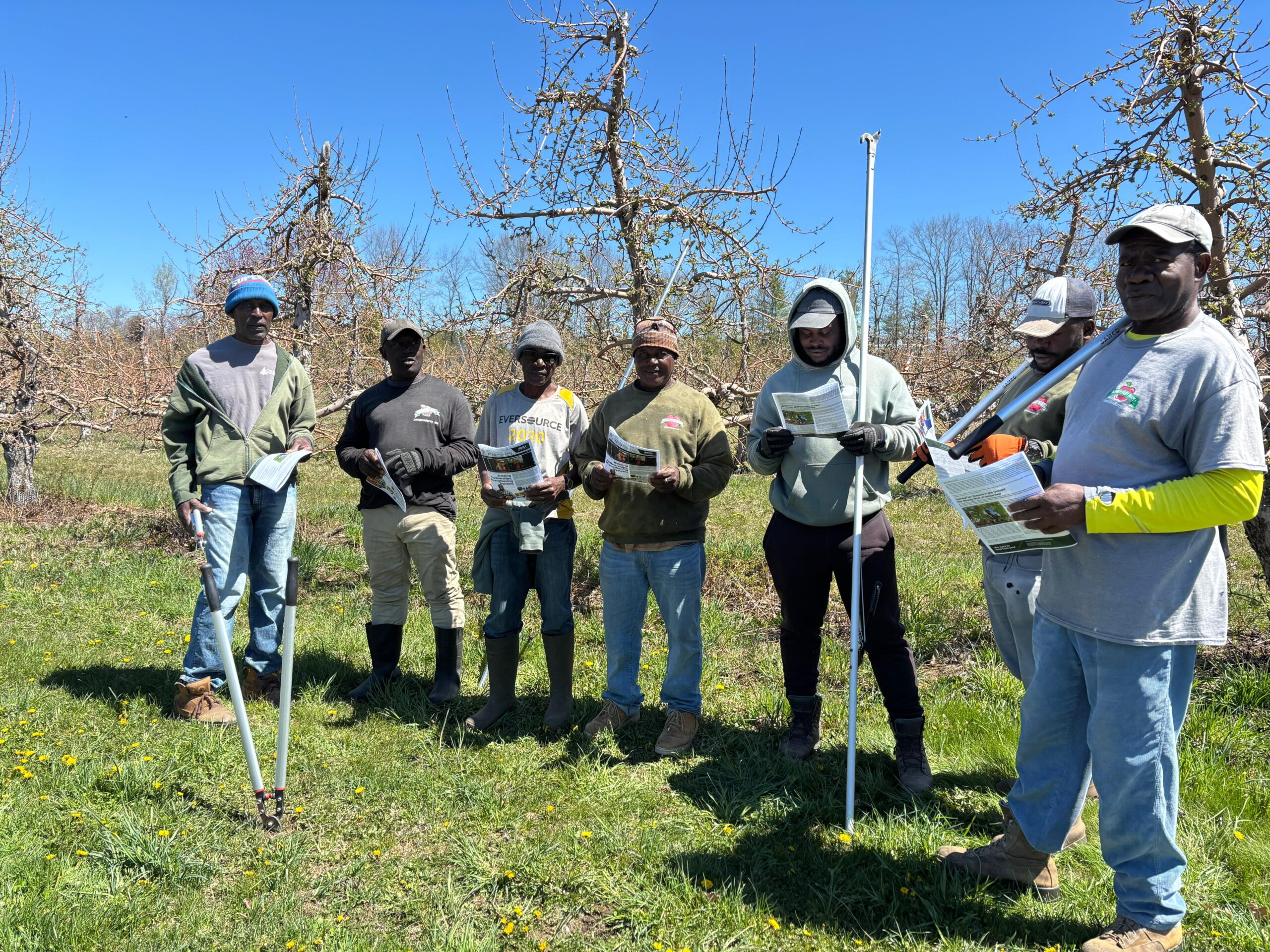
Jamaican workers pause briefly during a work shift at Champlain Farm, Vermont.
Returning year after year has given workers like Utneil an understanding of the orchard that cannot be replaced through short-term labour. They know the trees, the pace of the season, and the standards required once apples move off the field. That knowledge reduces error and protects quality during the most sensitive stages of production.
At Champlain Orchards, Jamaican workers are not interchangeable hands brought in for a single task. They are part of a process that extends from soil preparation to finished product, shaping outcomes that carry the farm’s reputation into the marketplace.
Most consumers who pick up a bottle of cider will never see the orchard or meet the workers who helped produce it. But the result reflects their presence all the same, in consistency, care, and reliability.
From harvest to table, Jamaican labour is not only about getting crops out of the ground. It is about ensuring that what reaches the shelf is worthy of return, season after season.
Share this article
Other articles

August 31, 2026

June 2, 2026
May 7, 2026

May 7, 2026

April 14, 2026

April 14, 2026
April 14, 2026


