

Returnees Are the Institutional Memory on U.S. Farms
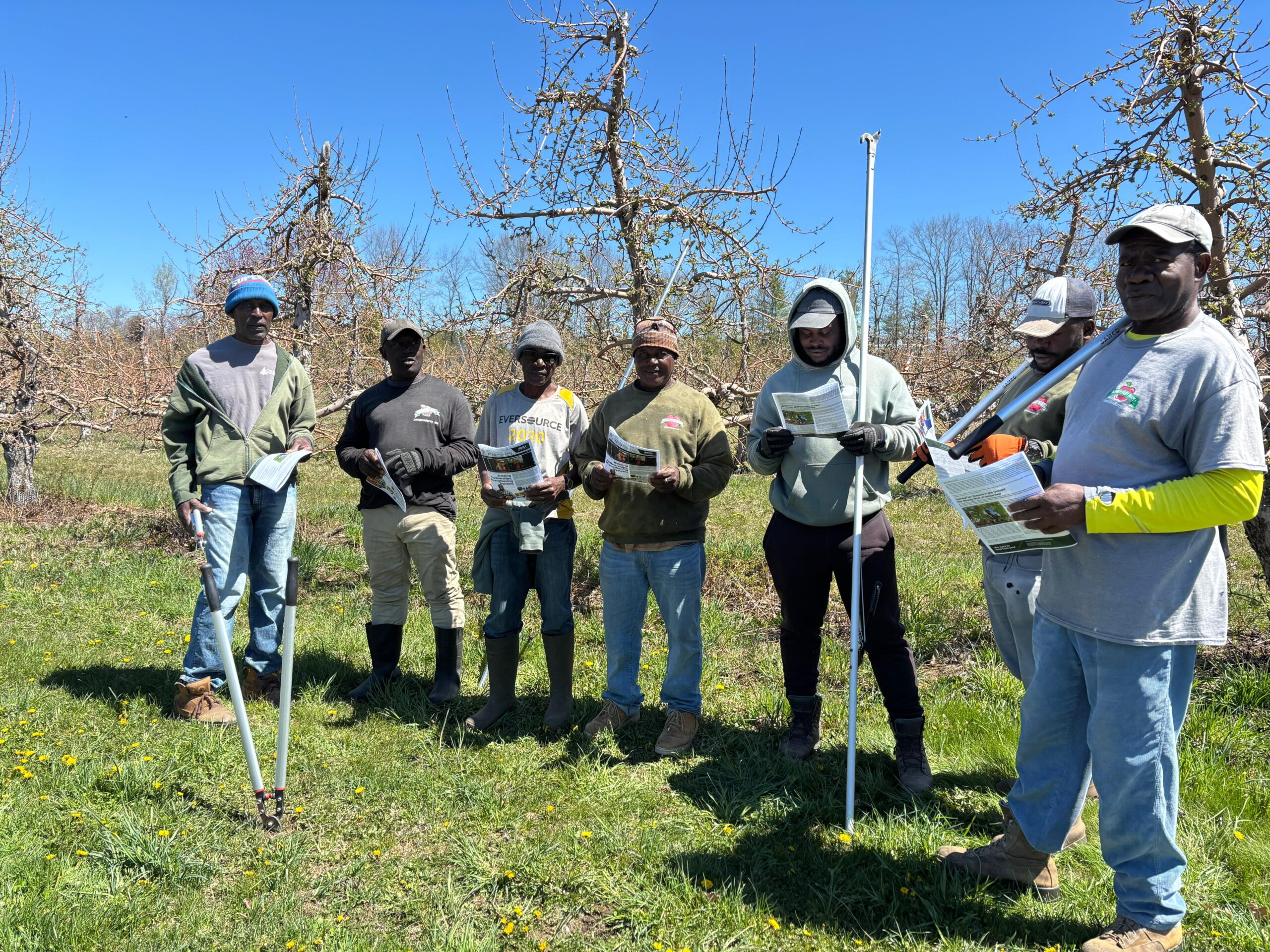
Every fall, in the rolling hills of upstate New York, a fleet of buses pulls into Northern Orchard. Nearly 150 Jamaican men step out, many carrying the same duffel bags they’ve carried for decades. Some have been harvesting apples on this land for almost 40 years.
“They know the orchard like the back of their hand,” said Jesse Mulbury, the farm’s third-generation owner. “Honestly, we wouldn’t exist year to year without them.”
In the conversation about seasonal labour, much attention goes to raw numbers visas issued, crops saved, and wages earned. But on farms like Mulbury’s, Jamaica’s migrant workers represent something more intangible: institutional memory.
Orchards are ecosystems of routine and subtlety. Branches arch differently year to year. Soil shifts with the weather. Fruit bruises with a careless touch. Mulbury describes apples as “like raw eggs” fragile, unsellable if handled too roughly. Those lessons aren’t easily taught.
For returning Jamaicans, the knowledge is second nature. Veteran pickers know which rows ripen fastest, which ladders wobble, which bins must be loaded in sequence. Their presence means that when a new recruit joins, training is shortened from weeks to days.
“Many of our guys know the orchard better than some of our family members,” Mulbury said. “They’ve passed down tips across generations, and that’s what makes harvest possible.”
Mulbury remembers workers teaching him as a boy how to prune and spray the trees. Now in his 30s, he watches younger Jamaicans arrive, “hungry” to learn and willing to take on training beyond the contract. Some enroll in USDA courses on pesticide application or food-safety rules, absorbing techniques to bring back to their own farms at home.
That blend of veteran expertise and new eagerness creates a system of informal mentorship. It is not designed by policy but by practice: older men pass on tricks of the trade; younger ones absorb, adapt, and refine.
Farmers often admit an awkward truth: Jamaican workers outpace locals. “The Jamaican workers are vastly more efficient than U.S. workers,” Mulbury said bluntly. “It may be embarrassing, but we wouldn’t be getting very far without them.”
As older workers near retirement, the question looms: who will inherit their tacit knowledge? Mulbury sees the answer in the younger generation of men eager to take extra training, motivated not only by wages but by the chance to improve their own farms back home.
The Jamaican government’s strategy of pairing newcomers with veterans reinforces that pipeline. Skills don’t vanish with retirement; they are transferred, season after season, across oceans and generations.
In an industry defined by volatility, that human chain may be Jamaica’s greatest advantage. “It’s not just labour,” Mulbury reflected. “It’s memory. And without that memory, we’d be lost.”
Share this article
Other articles

August 31, 2026

June 2, 2026
May 7, 2026

May 7, 2026
April 14, 2026

April 14, 2026
April 14, 2026


