

“You Have to Be Ready”: Shafay’s Journey Through the H-2B Programme
Before the job begins, there is a process many never see. For Shafay, entering the H-2B programme meant preparation, uncertainty, and stepping into the unknown. The journey involved more than travel; it required adjustment, discipline, and purpose. What followed was a pathway to stability over time.
For Shafay, a Jamaican worker from Falmouth, Trelawny, that journey started with a conversation. A friend who had recently returned from the programme spoke about the experience and the impact it had made back home. Drawn to the idea that overseas work could create tangible opportunities locally, she took the next step, engaging the Ministry of Labour to understand the process and what it required.
From there, everything became structured.
“You had to have your passport, your experience, your documents ready,” she recalled. “They walked us through everything.”
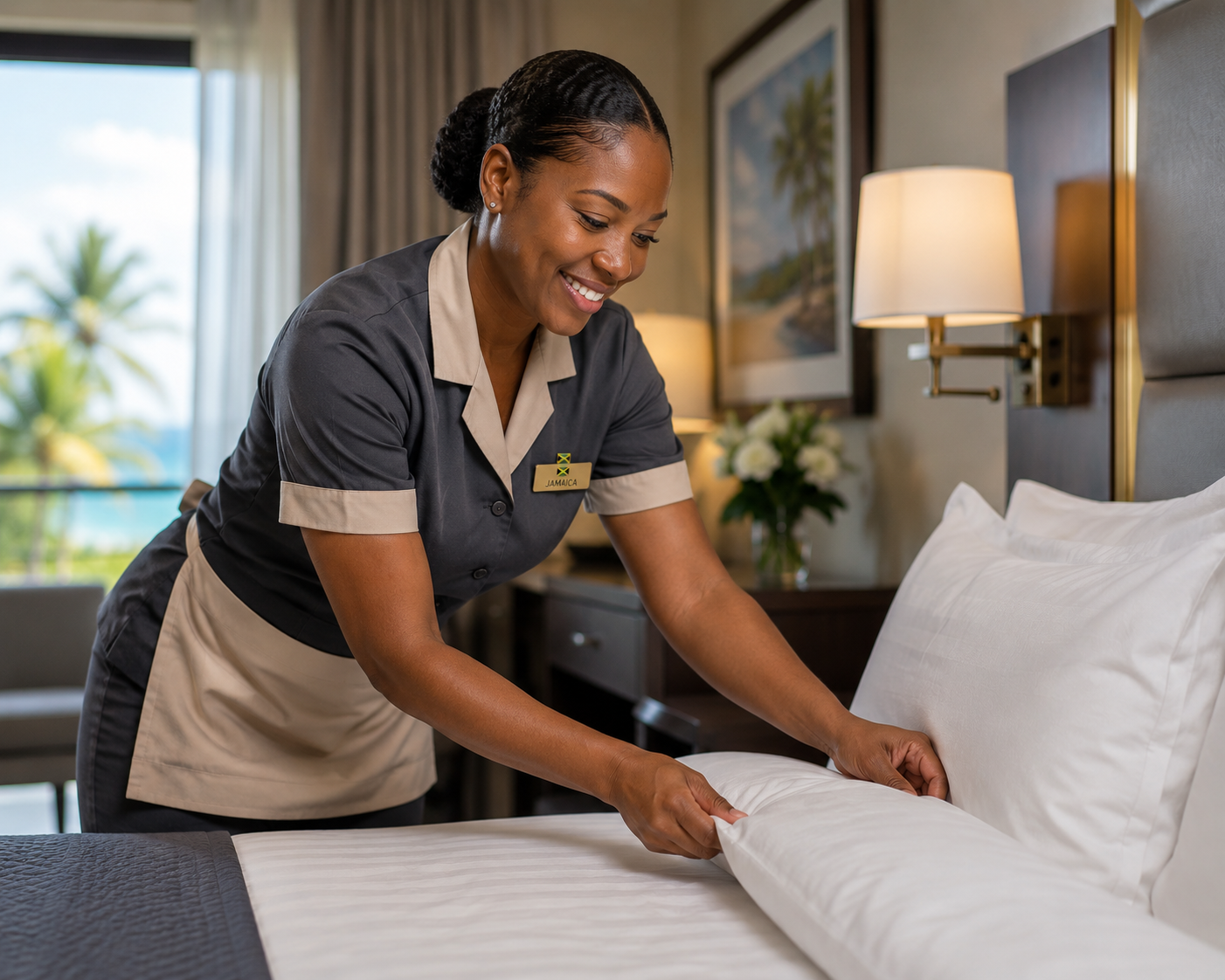
Her background in hospitality helped.
She had worked at a small family-oriented hotel, balancing roles as both a housekeeper and a vacation nanny, responsible for maintaining rooms and caring for children.That experience became her entry point.
Over time, she would spend more than a decade participating in the programme, travelling to the United States under H-2B visa programme to employers in North Carolina and returning season after season.
But the first time was different.
“I was scared,” she said. “I had never been on a plane before. I was leaving my family, going somewhere I don’t know.”
At the Ministry of Labour, workers went through interviews, and documentation reviews. Expectations were made clear about the job, behaviour, discipline, and financial responsibility.
“The Ministry gives you a full breakdown of what to expect,” she explained. “Where you’ll stay, how you’ll work, what you need to do.”
By the time departure came, the emotional weight had set in.
“You’re thinking about your family. You’re thinking about where you’re going. Everything starts rushing through your mind.”
The journey itself did not end at the airport.
Workers were received, transported, and settled into shared housing arrangements, often travelling long hours, sometimes days, to reach their final destination. It was a transition that required adjustment, not only to the work, but to the environment and weather.
“You have to learn to share space,” she said. “You have to adjust to how things are done.”
That adjustment is part of the programme.
Workers do not choose their placements. Employers request workers with specific skills and experience and workers are assigned based on need and fit. The expectation is that they arrive ready to perform, regardless of location.
“I hacd to have an open mind,” Shafay said. “And from my experience you may not like everything at first, but you have to focus on why you came.”
For her, that purpose was clear. Over the years, the programme has allowed her to provide for her family, support her child’s education, and maintain stability at home.
“I was able to send my daughter to school, keep her boarding, and take care of her,” she said. “That is what matters.”
The financial difference is significant.
“What you earn there can do much more when it comes back home,” she explained. “If you save and make the right choices, you will see the benefits.”
But the opportunity comes with responsibility.
“This is not a place to run off,” she added. “You have to respect the rules, respect the work, and understand why you’re there.”
That understanding is what sustains the programme.
For employers, it is a system that supports the viability of their business. For workers who return year after year, it becomes something more, a pathway to changing the trajectory of their families and improving their standard of living.
As Shafay puts it:
“If the opportunity comes, take it. Just be smart about it.”
Share this article
Other articles

August 31, 2026
June 2, 2026
May 7, 2026

May 7, 2026
April 14, 2026
April 14, 2026
April 14, 2026


