
THE FIRST STEP
Before a Jamaican candidate can pursue an overseas farm work opportunity, there are assessments to complete and important decisions to make. At recruitment centres, officers examine literacy, numeracy, experience and judgement, helping applicants understand the demands of working far from home.
A disagreement breaks out between workers on a farm overseas. A relative calls from Jamaica with an urgent request to return home. How should a worker respond?
For Jamaicans seeking opportunities through the Farm Work Programme, questions like these form part of a screening process designed to examine how applicants might respond to the challenges of overseas employment.
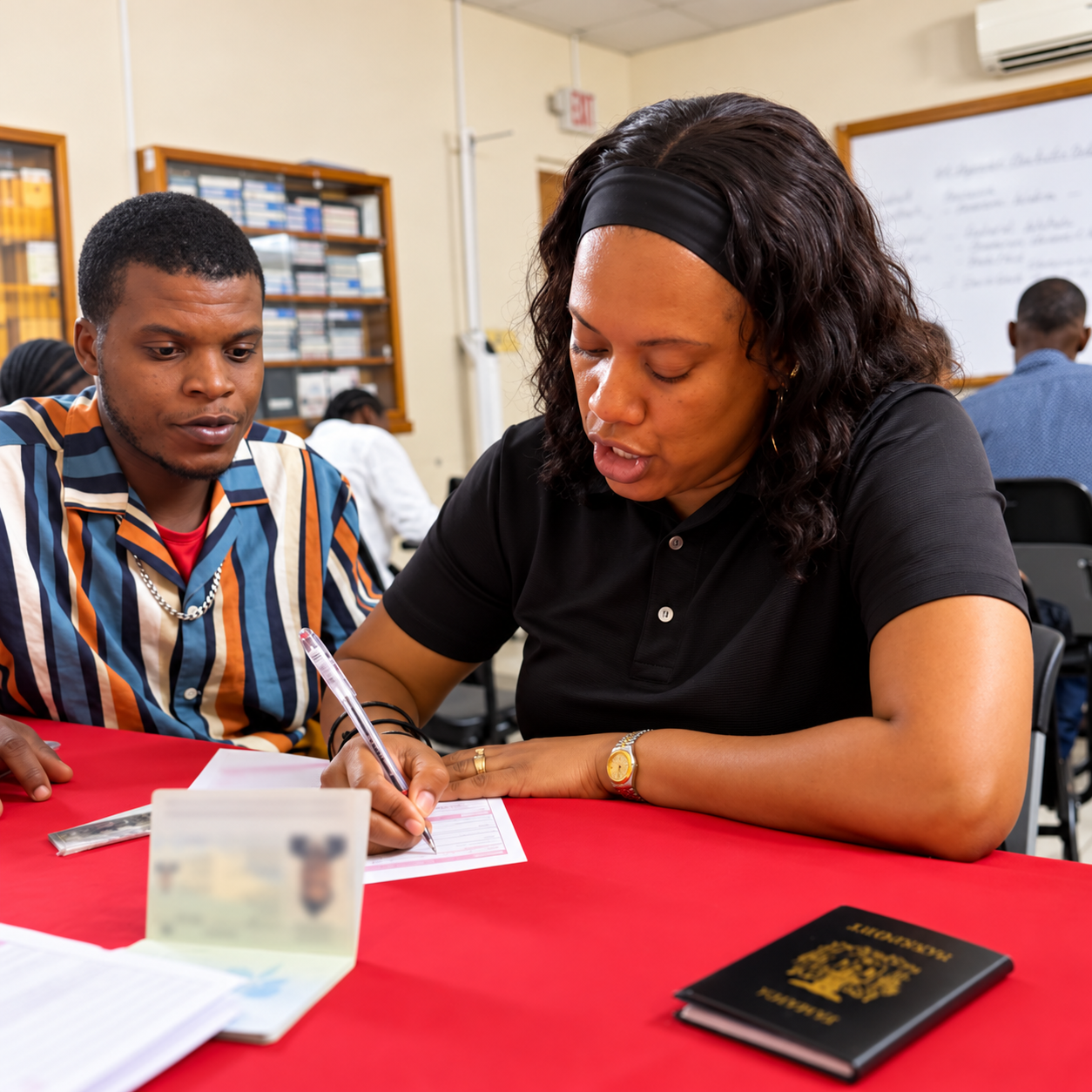
At a recruitment exercise in Portmore, Tamara Campbell-Barden, a Recruitment Officer with the Overseas Employment Programme, guided candidates through the first stages of that process.
The day begins with orientation, when applicants learn about the programme, the requirements and the stages ahead. Candidates then complete bio-data forms and an online assessment comprising psychometric, numeracy and reading components. Those progressing to the next stage await an interview.
The psychometric assessment introduces scenarios intended to examine judgement and decision-making in situations that could arise overseas.
“If you’re overseas and you see colleagues in a dispute, maybe even a physical fight, what would you do in that situation?” Campbell-Barden asked, describing one example.
Other questions explore how candidates might respond to family emergencies while working abroad, recognising that employment overseas requires both practical readiness and the ability to make considered decisions under pressure.
For some applicants, the first challenge is completing the forms. Campbell-Barden encounters candidates who struggle with reading, recording addresses or explaining their employment history. Officers therefore clarify the questions and emphasise the importance of accurately documenting farming experience.
The interaction is an important part of the recruitment exercise. Candidates must demonstrate their suitability, but they also need to understand what is expected of them.
Campbell-Barden has spent approximately 24 years in the Ministry, beginning in data entry and later serving in supervisory and senior data-control capacities before moving into overseas employment.
What she values most about her present role is the opportunity to engage and encourage applicants.
“I always encourage them, and I always tell them: listen, we’re here to support you. It’s a relationship. It’s a family,” she said.
For many candidates, the recruitment exercise represents an important possibility: the chance to earn overseas, support loved ones and pursue greater financial stability.
The assessments do not guarantee selection or departure. They form part of a process intended to identify applicants who may be prepared for the demands and responsibilities of seasonal agricultural work.
Before any candidate reaches the airport, that journey begins with preparation, careful assessment and an understanding of what the opportunity requires.
Share this article
Other articles
November 1, 2026
November 1, 2026

August 31, 2026

June 2, 2026
May 7, 2026

May 7, 2026

April 14, 2026


