
THE PEOPLE WHO CARE
For Jamaican farm workers, an overseas employment opportunity begins a journey that affects entire families. Behind the contracts and departures is a team whose work continues at home, supporting children, strengthening households and helping workers navigate life’s unexpected difficulties.
For 23 years, Karen Gardner has witnessed the many ways overseas employment can change a Jamaican family. She has seen workers leave in pursuit of better opportunities, children adjust to a parent’s absence and households find reassurance in the work of officers whose contributions rarely attract public attention.
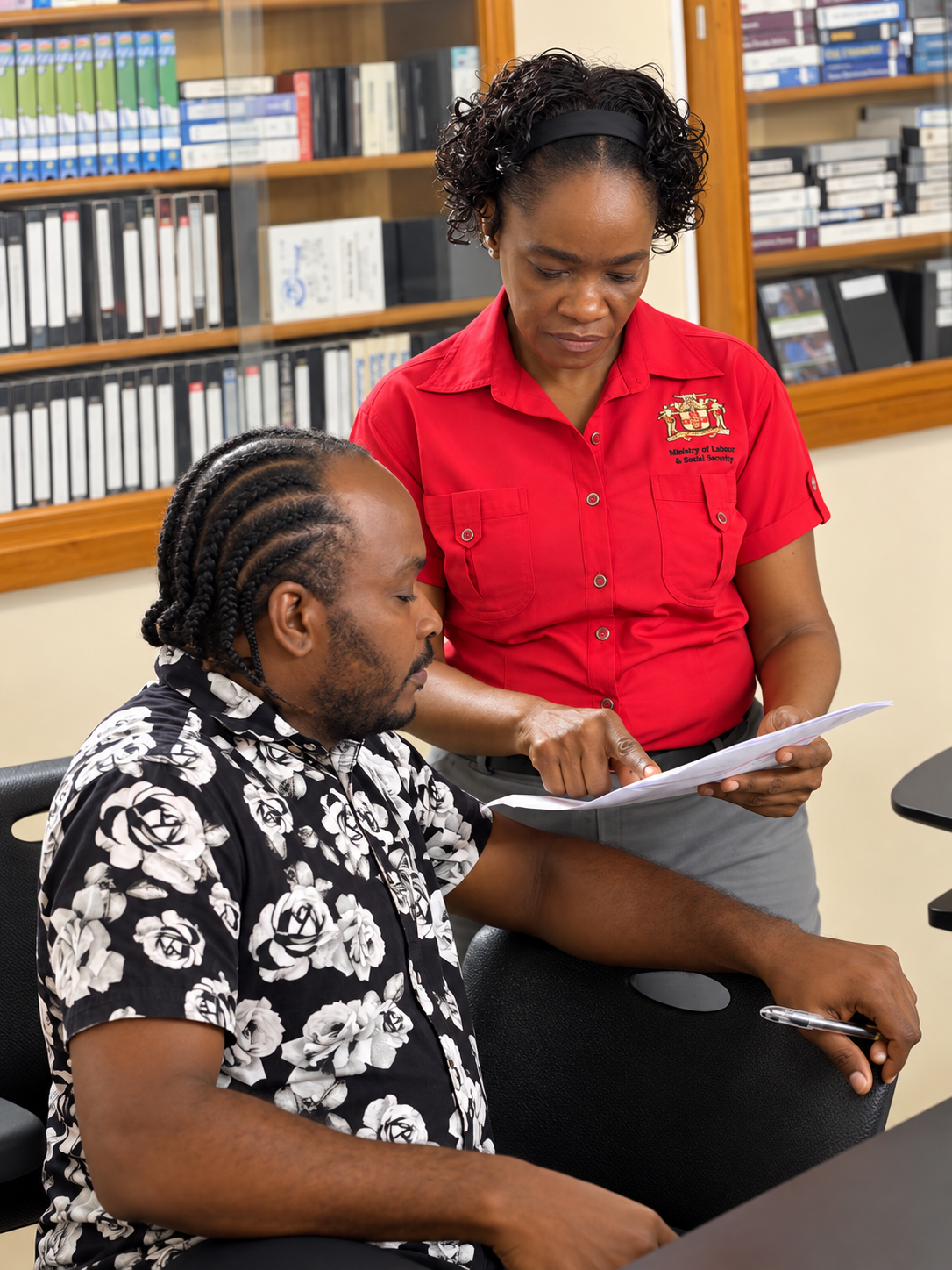
As Director of the Family Services Unit in the Ministry of Labour and Social Security, Gardner leads a team whose responsibilities stretch across the Overseas Employment Programme, from facilitating farm worker recruitment to supporting families and coordinating care for workers who return home sick or injured.
Across Jamaica’s parishes, social workers visit the homes of farm workers, assess household circumstances, check on children’s schooling and help families maintain contact with loved ones abroad. When difficulties arise, the Unit provides counselling, makes referrals and, where necessary, engages liaison officers overseas to help resolve concerns.
It is work that requires officers to understand the people behind each employment opportunity.
“People want to know that you care about them, that they’re not just a statistic,” Gardner said.
A routine home visit may reveal a family struggling with the absence of its principal breadwinner. A conversation with a caregiver may uncover a child having difficulty adjusting to a parent’s departure. In other circumstances, an officer may help a worker returning from overseas obtain medical attention and maintain the appointments necessary for recovery.
For Gardner, the work has taken her into hospitals, airports, family homes and difficult conversations that remain with her long after the working day has ended. Yet the moments she values most are often those that demonstrate how deeply families remember the support they received.
“It makes a difference when people come back and tell us how much of an impact we’ve had,” she explained.
She recalls children approaching her years later, remembering conversations about why their parents had travelled overseas to work. Families, too, have maintained contact with the Unit long after an intervention ended.
These relationships offer a different measure of the Overseas Employment Programme’s success. Beyond placements, earnings and returning workers are households learning to manage separation, children continuing their education and families receiving help when circumstances become difficult.
Gardner believes that the greatest contribution officers can make is to ensure that families feel supported and valued.
For the workers pursuing opportunities thousands of miles from Jamaica, that commitment offers something important: the knowledge that while they are working abroad, someone remains attentive to the people who matter most to them.
Share this article
Other articles
November 1, 2026
November 1, 2026

August 31, 2026

June 2, 2026
May 7, 2026

May 7, 2026
April 14, 2026


